



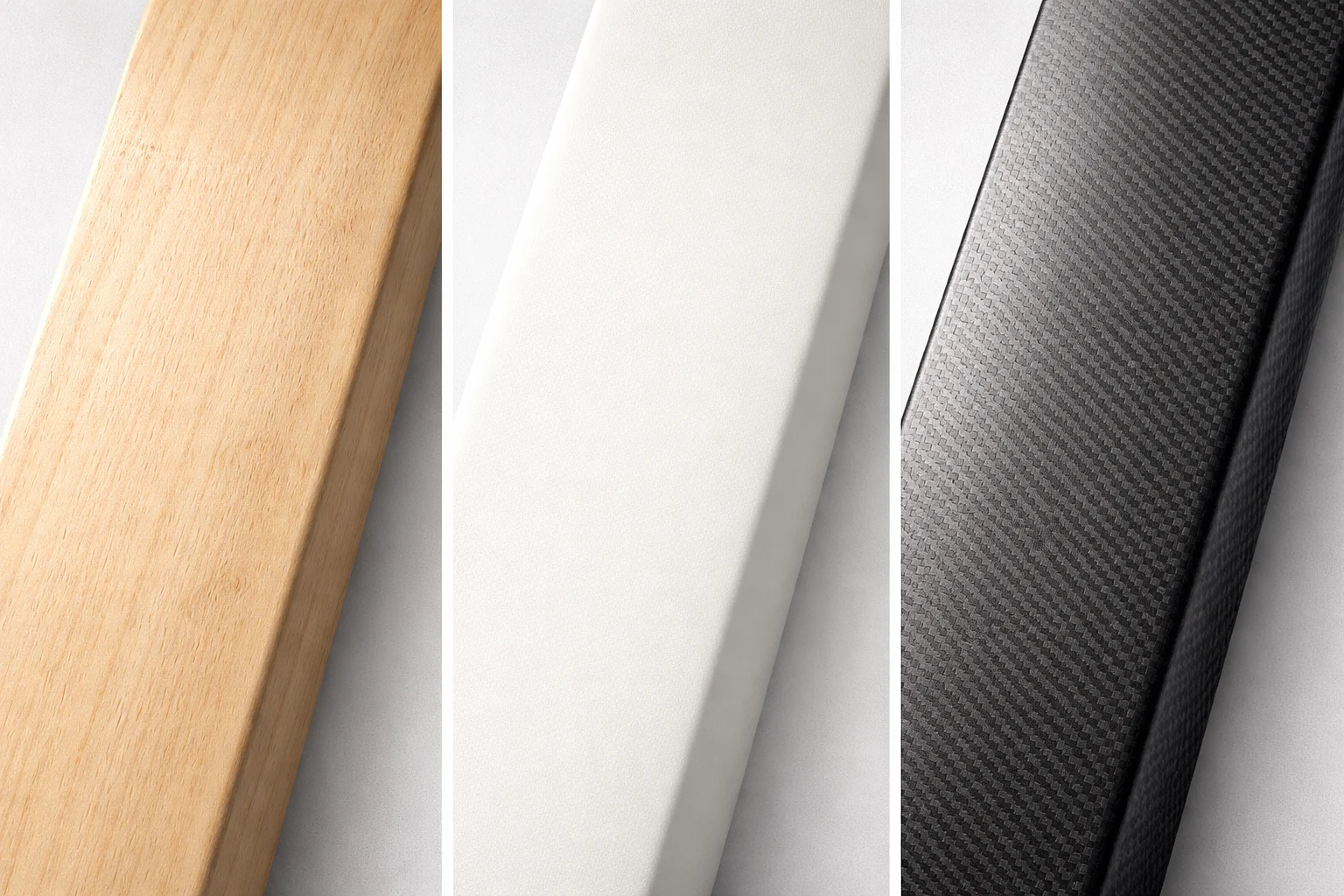
Stand in front of a bat rack and everything looks fine until the first ball hits the blade. One bat feels heavy, another feels hollow, and another feels balanced but unfamiliar. That moment decides whether the game feels smooth or messy.
Bat material matters more than people admit. Wooden, plastic, and composite soft ball cricket bats behave differently when you swing, when you mistime, and when conditions change. If you don’t match the material to how and where you play, even a good-looking bat becomes dead weight.
This guide keeps things practical for Sri Lankan conditions. Roads, school grounds, matting pitches, heat, humidity, and uneven bounce. No theory talk. Just how each bat type behaves and how you should choose based on real play.
Why bat material matters in soft ball cricket
Soft ball cricket moves fast. The ball is light, reaction time is short, and many games happen in spaces that don’t forgive slow swings. Bat material controls swing speed, balance, vibration, and how forgiving the bat feels when timing isn’t perfect.
Two bats can be the same size and weight but feel completely different because of material. That difference shows up in control, fatigue, and consistency across an innings. If material suits your game, everything feels calmer. If it doesn’t, you fight the bat all day.
What is a wooden soft ball cricket bat?

A wooden soft ball cricket bat is made from solid wood and feels firm and stable on contact, offering better control and clear feedback but requiring consistent timing and stronger wrists to use comfortably in fast-paced soft ball cricket conditions.
Wooden bats feel closest to traditional cricket bats. When you middle the ball, contact feels clean and controlled. You know instantly whether the shot was timed well or not.
That feedback is both a strength and a weakness. Good timing feels rewarding. Poor timing feels harsh.
How wooden bats behave during play
Wood doesn’t flex much on impact. That means the bat transfers force directly to your hands. On clean hits, shots travel with confidence. On mishits, vibration travels up the handle.
Swing speed also feels slower because wooden bats usually carry more weight toward the blade. That blade-heavy feel demands early shot preparation.
Where wooden bats work best
Wooden bats suit matting pitches and school grounds where bounce is more predictable. They work well for players who already understand timing and don’t rely on last-second wrist movement.
On roads or uneven surfaces, wooden bats can feel unforgiving. Low bounce and sudden pace changes expose mistimed shots quickly.
Who should avoid wooden bats
If you’re new to soft ball cricket or play mostly street cricket, wood may feel demanding. It doesn’t forgive late swings or poor footwork. Fatigue also builds faster in long games under heat.
What is a plastic soft ball cricket bat?

A plastic soft ball cricket bat is lightweight and slightly flexible, making it easy to swing and forgiving on mishits, which suits beginners, casual players, and street cricket where quick reactions and comfort matter more than shot depth.
Plastic bats dominate street cricket for a reason. They’re easy to handle, quick through the air, and reduce shock on impact.
They don’t feel solid like wood, but they let you play freely without fear of harsh feedback.
How plastic bats behave during play
Plastic flexes slightly when the ball hits the blade. That flex absorbs vibration and reduces strain on your hands. Swing speed stays high, which helps against quick bowlers and tight spaces.
The trade-off shows on clean hits. Plastic bats don’t carry the same punch or stability as wood, especially on longer shots.
Where plastic bats work best
Plastic bats work best on roads, indoors, and small grounds. They suit games where placement, quick singles, and reaction time matter more than power.
They’re also practical for younger players or anyone playing casually after work or school.
Limits of plastic bats
Plastic loses shape over time, especially in heat. Blades may bend slightly, affecting shot direction. On matting pitches, plastic bats can feel too light and unstable.
What is a composite soft ball cricket bat?

A composite soft ball cricket bat uses mixed materials to balance control, durability, and forgiveness, making it suitable for players who want consistent performance across roads, matting pitches, and changing play conditions.
Composite bats sit between wood and plastic. They aim to offer stability without harsh vibration and better shape retention than plain plastic.
They’re designed for players who don’t want to switch bats based on surface or setting.
How composite bats behave during play
Composite materials spread impact force across the blade. That reduces shock while keeping the bat stable. Swing speed feels moderate and predictable.
Contact feels controlled without being harsh. Mishits don’t punish as much as wood, but clean hits feel firmer than plastic.
Where composite bats work best
Composite bats suit mixed conditions. If you play on the road one day and on matting the next, composites adjust better.
They’re useful for players who play regularly but not always in the same place.
How material affects weight and balance
Material decides where weight sits in the bat.
Wooden bats usually feel blade-heavy. Plastic bats often feel handle-heavy. Composite bats aim for even balance.
Blade-heavy bats reward early swings. Handle-heavy bats reward quick wrists. Even balance rewards consistency.
If you struggle with late shots, avoid blade-heavy bats. If your shots lack depth, avoid very handle-heavy bats.
How material affects fatigue during play
Fatigue matters in Sri Lankan conditions. Heat and humidity punish heavy setups.
Wooden bats tire wrists and forearms faster. Plastic bats feel light but can cause over-swinging. Composite bats usually manage fatigue better across long games.
Comfort over time matters more than how the bat feels in the first five minutes.
Durability differences you should know
Durability isn’t just about breakage. It’s about how the bat behaves over months of use.
Wood can crack or chip if mishandled or stored poorly. Plastic resists cracks but may bend or soften. Composite bats usually hold shape longer but can weaken if damaged internally.
Storage matters for all types. Heat, moisture, and careless handling shorten lifespan fast.
How playing surface changes material choice
Surface changes everything.
On roads, bounce is low and unpredictable. Shock absorption matters more than feel. Plastic and composite bats reduce strain and control mishits better.
On matting pitches, bounce is cleaner. Stability matters more. Wooden and composite bats feel more reliable.
If you switch surfaces often, composite bats reduce adjustment time.
How experience level affects material choice
Skill level matters more than strength.
If you’re new to soft ball cricket
Plastic or composite bats work best. They forgive mistakes and reduce strain. Learning timing feels easier.
Wood often frustrates beginners because it exposes every error.
If you play regularly
Composite or wooden bats start making sense. Timing improves, and feedback helps refine shots.
Many players move from plastic to composite before touching wood.
Common mistakes when choosing bat material
Many players buy based on looks or what others use. That usually backfires.
Choosing wood too early leads to frustration. Choosing plastic for matting limits growth. Ignoring composite options keeps you stuck between extremes.
Match material to how you actually play, not how you wish you played.
How to decide quickly between materials
Ask yourself three questions.
Where do you play most often. How consistent is your timing. Do you value comfort or feedback more.
Road play and casual games point to plastic or composite. Mixed play points to composite. Regular matting play with settled timing points to wood.
A practical comparison table
|
Feature |
Wooden |
Plastic |
Composite |
|---|---|---|---|
|
Swing speed |
Slower |
Fast |
Moderate |
|
Forgiveness |
Low |
High |
Medium |
|
Feedback |
Strong |
Minimal |
Balanced |
|
Best surface |
Matting |
Road |
Mixed |
|
Fatigue level |
Higher |
Low |
Moderate |
Use this as guidance, not a rulebook.
How material choice affects buying decisions
Once you understand material behaviour, comparing our soft ball cricket bats collection becomes easier. You stop judging by appearance and start judging by suitability.
The right material won’t turn you into a better batter overnight. What it does is remove friction from your game. That makes every session steadier, more controlled, and far less tiring, which is exactly what a bat should do.